
Why Avoid Artificial Intelligence (and Computers) When Working on the Craft of Writing
Before formulating my opinion on this topic, I did a little research. Here are a few of the articles that I read, and that I recommend taking a look at if this is a topic of interest:
Armstrong, T. M. (2024). 20 reasons to write by hand, according to science. Top Education Degrees. https://www.topeducationdegrees.org/proven-reasons-to-write-by-hand/
Bauerlein, M. (2019, June 14). Phenomenology of the hand. The Classical Teacher, Summer 2019. Memoria Press. https://www.memoriapress.com/articles/phenomenology-of-the-hand/
Dowding, M. (2024, August 25). AI in the writing classroom: Professor, Beware. National Review. https://www.nationalreview.com/2024/08/ai-in-the-writing-classroom-professor-beware/
Hu, C. (2024, July 30). Why writing by hand is better for memory and learning. Scientific American. https://www.scientificamerican.com/article/why-writing-by-hand-is-better-for-memory-and-learning/
Ihara, A. S., Nakajima, K., Kake, A., Ishimaru, K., Osugi, K., & Naruse, Y. (2021, June 10). Advantage of handwriting over typing on learning words: Evidence from an N400 event-related potential index. Frontiers in human neuroscience. https://www.ncbi.nlm.nih.gov/pmc/articles/PMC8222525/
Lambert, J. (2024, May 11). Why writing by hand beats typing for thinking and learning. NPR. https://www.npr.org/sections/health-shots/2024/05/11/1250529661/handwriting-cursive-typing-schools-learning-brain/
Storey, D. (2024, January 30). Handwriting shows unexpected benefits over typing. Psychiatrist.com. https://www.psychiatrist.com/news/handwriting-shows-unexpected-benefits-over-typing/
Van der Weel, F. R. (Ruud), & Van der Meer, A. L. H. (2024, January 25). Handwriting but not typewriting leads to widespread brain connectivity: A high-density EEG study with implications for the classroom. Frontiers. https://doi.org/10.3389/fpsyg.2023.1219945
With the exception of Dowding’s article that focuses on Artificial Intelligence, the above articles make the claim that writing by hand has significant benefits for the brain over writing by keystroke. These benefits include increased memory, thinking, learning, creativity, visual processing skills, and word recognition.
Dowding states, “Generative artificial intelligence has no role in the walled garden of teaching a student how to write” (Dowding, 2024).
 My opinion: This would be a great research project! Based on the research that has already been done and is available at the links listed above, I am wholeheartedly in favor of encouraging kids to write their rough drafts by hand. My students have always filled out the graphic organizer and written the rough draft by hand and using colored pencils to color-code the different parts of the paragraph or essay so that the organization is highly visual. They have also written out the final draft by hand. Once that is done, some have chosen to create a typed copy.
Regarding the use of Artificial Intelligence, it can be fun to see what AI can generate in two seconds, but, as far as I can tell, it doesn’t help our own brains become more creative, generate our own original ideas, or develop critical thinking skills. Nor do I see how it can reflect our own unique voice. It is doing the “thinking” for us, and it is assigning a “voice” to us. In other words, it takes away our freedom to be in charge of our own thinking, our own ideas, our own voice, our ability to make our own connections. It takes away the joy and sense of accomplishment we feel when we have our own “a-ha!” moments, and when we see the end result of all our effort and perseverance. It doesn’t let us take full credit for our creativity, our own ideas, and our own effort. It doesn’t let us have the fun of playing with language, of coming up with just the right simile or metaphor, of weighing slightly different connotations of seemingly similar “synonyms,” of getting excited about a subtle hint of foreshadowing that we intentionally placed in our writing, or of finding humor in our use of language that could be taken both literally and figuratively.
As I shared in the Preface:
Our kids are the future of our world. They are the future problem-solvers, policy-makers, decision-makers, and voters (who need to compare, contrast, and evaluate their choices). We do not want them to be dependent on a computer to do their thinking for them. As we will see in this curriculum, thinking includes the ability to analyze, make connections, solve problems, understand cause and effect, compare and contrast, evaluate, create, and more.
Part of the joy of thinking, though, is to communicate our ideas with others! Otherwise, our ideas just stay in our own brain, remain unknown to everyone else, and cannot be used to make a positive difference in the world. One of the main ways to communicate is through writing. In this curriculum, we are working on both thinking skills and writing skills.
If we were to turn to artificial intelligence, then we would be handing a lot of control over to a computer. Imagine a world where much of the work of inventors, creators, artists, architects, engineers, and writers is done by artificial intelligence! If we want to maintain control of our own minds so that we can come up with our own ideas and communicate them with our own voice, we need to avoid using artificial intelligence while we work on learning how to become better thinkers and writers (better communicators).
I would add that some of the greatest God-given gifts we have, as they are part of how we are designed to be, include the ability to think, the ability to communicate, and the freedoms that go with those. We are created to have free will, and thus we have the right to choose our own ideas, beliefs, and faith. We also have freedom of speech which allows us the right to communicate our ideas, beliefs, and faith.
Of course, as members of a civilized society, we expect that people will communicate in a way that is respectful of all people having the same right to their own ideas, beliefs, and faith. As it will often happen that two people do not agree, and thus there is a conflict, and different people and different cultures approach conflict in different ways, it is true that life can seem messy. But it is still filled with people who have the ability to learn. People can learn how to think more critically, how to solve problems, how to handle and resolve conflicts, and how to communicate.
When we communicate, we choose what ideas we want to share, and what words we want to use for explaining those ideas. Those choices should not be dependent on having a law tell us what ideas we can or can’t have or share, or what words we can or can’t say. We have the ability to choose our own words well. We are designed with free will, and we are responsible for our own choices of words and actions. According to moral philosophy, also known as “ethics,” we should have a moral compass to guide us in those choices. This is an ability to choose our words and actions based on our effort to discern right from wrong. This is how we can be respectful of others who have ideas in conflict with our own. Moral philosophy, or “ethics” was a topic of great interest to many of the ancient Greek philosophers such as Socrates, Plato, and Aristotle. Aristotle was the first to use the term, “ethics.”


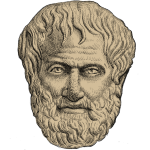
In short, humans have the ability to think and ponder about the impact their words and actions may have on others, to think about and discern right from wrong, to consider what is moral, and then to think about the best way to proceed.
AI does not have a moral compass. That is a human quality. But, it is a quality that requires developing. It develops through observation of good models, through guidance, through questioning and discussion (Socratic discussions), and through learning how to think critically.
But if we are not doing the hard work of thinking for ourselves when it comes to analyzing literature, doing research, and writing down ideas and information in an organized, reasonable, and eloquent way, then we are not developing our critical thinking skills. If we are allowing AI to tell us what thoughts to have, and what words to use in order to communicate those ideas, then we are giving up a lot of the control that we could be having over our lives.
I still remember being asked by a third-grader, back in 2002, “Miss Lungren, what does ‘think’ mean?” Let’s answer that question!
It is one thing for a dentist to use AI to detect cavities. In my mind, that is simply an advance in technology. It’s also one thing for an adult to use AI to do something quickly that he or she is capable of doing on his/her own. However, in that situation, the adult has learned the skill and is capable of doing it. It’s a completely different thing for kids who haven’t yet developed high-order thinking skills and advanced writing skills.
Revisiting the handwriting issue, many schools have replaced writing by hand with typing on a keyboard. Most schools no longer teach cursive, despite all the research out there about how beneficial cursive writing is for the brain. The question is: Are there significant benefits to writing by hand? According to the many research studies cited in the above articles, the answer is yes!
 That brings me to one final thought. The use of the typewriter. Yes, the vintage, old-fashioned typewriter! Way back when, students wrote their essays by hand, revised and edited them by hand, and then typed them on a typewriter. Once a word was typed using the typewriter, the typist would not be too excited about getting out the white-out for the purpose of revision or editing! Thus, those steps were completed before the typing began.
In contrast, typing on a computer does not require one to finish the steps of revising and editing first. It is easy to edit on a computer. Select, cut, copy, paste, etc. Thus, on the computer, if one types fast, it can feel like our thoughts are instantly turning into words as soon as they appear in our mind. And if we change our mind, we can quickly delete, move, change, or whatever we want. We can even use speech-to-text that lets the computer transcribe our spoken words! The problem with all this is that it allows one’s writing to be more stream-of-consciousness, and less well-thought out. It is still writing, but the brain is going about it in a different way. There is less planning, less thinking, and less organizing that goes into the writing ahead of time, as the writer knows that he can quickly delete, move, change, etc. later. If one is going to use a typewriter for the final copy, he likely wants to have written it out by hand first. When writing by hand, one thinks of the sentence before he writes it. When writing on a computer, one often thinks of the sentence as he is writing it. This is an example of how the brain is going about the writing process in a different way when the first draft is written by hand vs. on the computer.
If we are learning our educational material (the content) via the Internet or a digital version of the text, we can copy-and-paste the text straight into our “notetaking” software. Unfortunately, since copy-and-paste does not require much thinking, our brain is not processing the information, mulling it over, trying to summarize it, or retaining it. But, if we are looking at a printed book and want to take notes, we have to develop the skill of discerning what is important and what is not, of summarizing key points using key words, and writing that down on paper in a way that shows the connections (what does one thing have to do with something else). In this curriculum, we will be working on those skills of discernment and summarizing that are used in notetaking.
All to say, putting pencil to paper requires our brain to be constantly thinking, analyzing, evaluating, reviewing, and considering how we want to revise and edit. One advantage that the typewriter has over the computer is that if we want a typed copy of our paper, it forces us to do all of our thinking before we start typing. One advantage to taking notes from a printed book is that it requires us to do our thinking before we start jotting our notes down. In both scenarios, we are required to spend some time thinking before we make decisions or take action.
In the next article, we will look at rubrics. Rubrics make it possible for us to evaluate our writing, and evaluation is among the highest-order of critical thinking skills!
